Seumestr. 8 · 10245 Berlin · Friedrichshain
The story of Seumestraße 8
Built in 1911 at the height of Berlin's industrial expansion, the Altbau at Seumestrasse 8 has stood through more than a century of the city's history — the Weimar years, the war, the DDR, reunification, and gentrification. The apartment is on the ground floor of the front building. This is the building's story.
1911 — Berlin's industrial boom
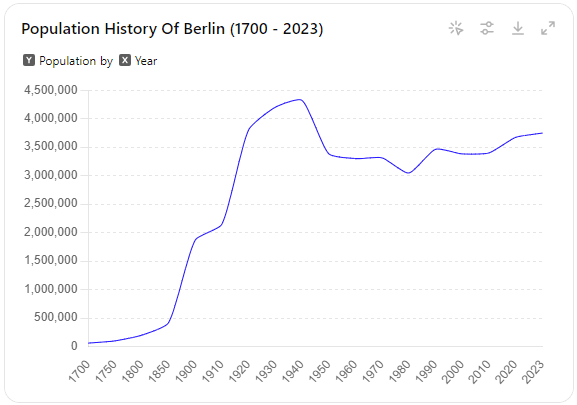
The building at Seumestraße 7/8 was built in 1911 — right in the middle of Berlin's most dramatic period of growth. The city's population had exploded from 172,000 in 1800 to nearly 2 million by 1919, driven by rapid industrialisation and the arrival of factories like Siemens (1847) and AEG (founded 1883) in the surrounding districts. Friedrichshain filled with workers' housing virtually overnight.
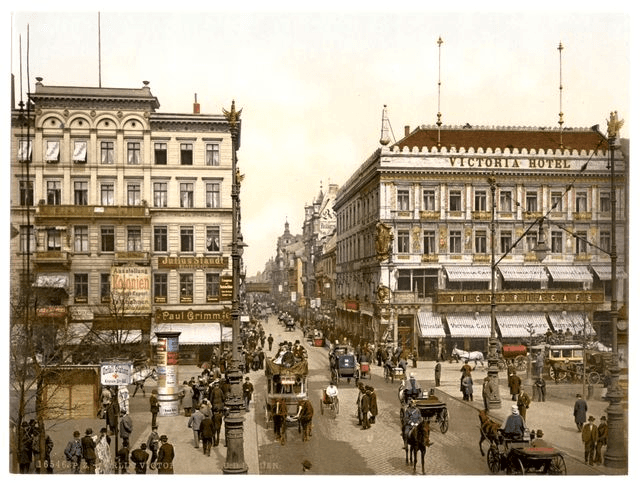
The buildings from this era follow a precise formula: 22 metres tall — exactly as wide as the street — with commercial spaces on the ground floor, four or five residential floors above, and a series of inner courtyards where small industrial workshops could operate. The result is the streetscape you see today along Seumestraße: solid, imposing, beautifully proportioned. In 1920, when Greater Berlin was established by parliamentary act (Groß-Berlin-Gesetz), Friedrichshain officially became a city district.
The 1920s — gangs, brawls, and parties
The 1920s brought something wilder. Friedrichshain became notorious for its gangs, huge street brawls, and extraordinary parties — a working-class neighbourhood with enormous energy. Tour guide Jonny Whitlam captures the era well:
Video by @whitlamsberlin — Berlin history walking tours
World War II — the Brandmauer
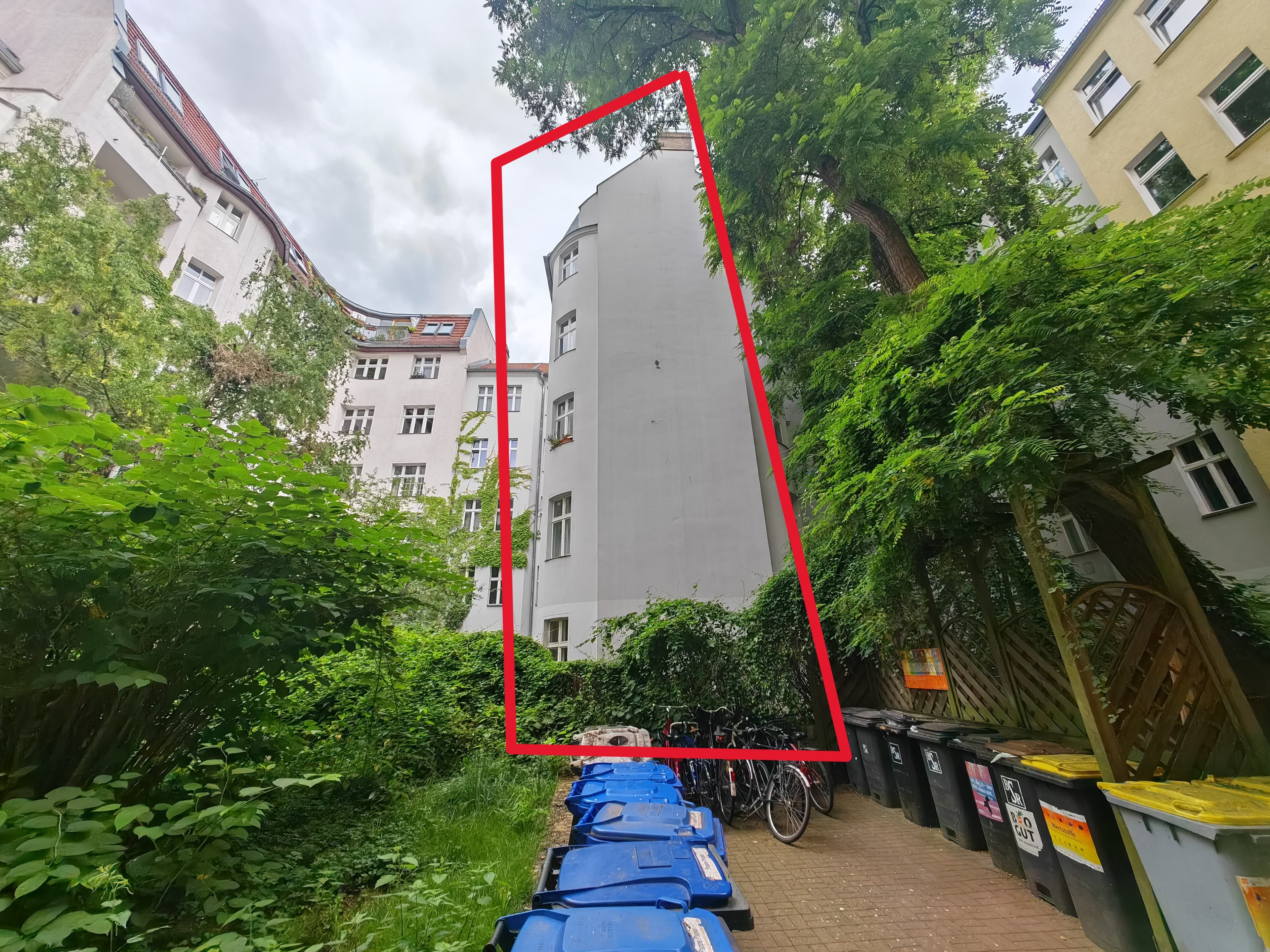
World War II left visible marks. Friedrichshain — renamed Horst-Wessel-Stadt under the Nazis — was heavily bombed due to its industrial base. If you look from the bathroom window into the courtyard at Seumestraße 8, you can see a large bare wall: a Brandmauer (firewall), built to stop fire spreading between buildings. That wall once connected to the neighbouring building. The neighbour was bombed and destroyed; the firewall remains.
East Berlin — the DDR years
After the war, Friedrichshain became part of East Berlin — a working-class district under the DDR, largely untouched by the modernisation projects that reshaped West Berlin. Seumestraße was lived in, worn, and very much a neighbourhood rather than a destination.

A resident of Seumestraße in the 1960s, Jutta Langer, recalled what life on this exact street was like during the DDR:

"Her first quarters in Friedrichshain were on Seumestraße, where she was taken in by the parents of a friend who had gone to the West. 'They were very kind to me and asked me to move into their room.' But this did not last long. 'One day I come home, everything strangely quiet. No one there, the cupboards empty. That's when I knew they too had gone to the West. In the kitchen, there was a big note: Dear Jutta, I hope you understand our step... Of course, I couldn't keep the apartment. I was only able to keep a folding bed from the furniture, which I also had to pay for. Then I was assigned an apartment on Krossener Straße.'"
Reunification and today
After reunification, Friedrichshain became a stronghold of Berlin's squatter and punk scene — empty buildings occupied, Wagenburg settlements, radical politics. Then, gradually, the organic food shops arrived. Then the restaurants. Then the Sunday flea market at Boxhagener Platz. The gentrification of the last 25 years has been real, but Seumestraße and the surrounding area have held onto an edge that most of their counterparts in Mitte or Prenzlauer Berg have long since lost.
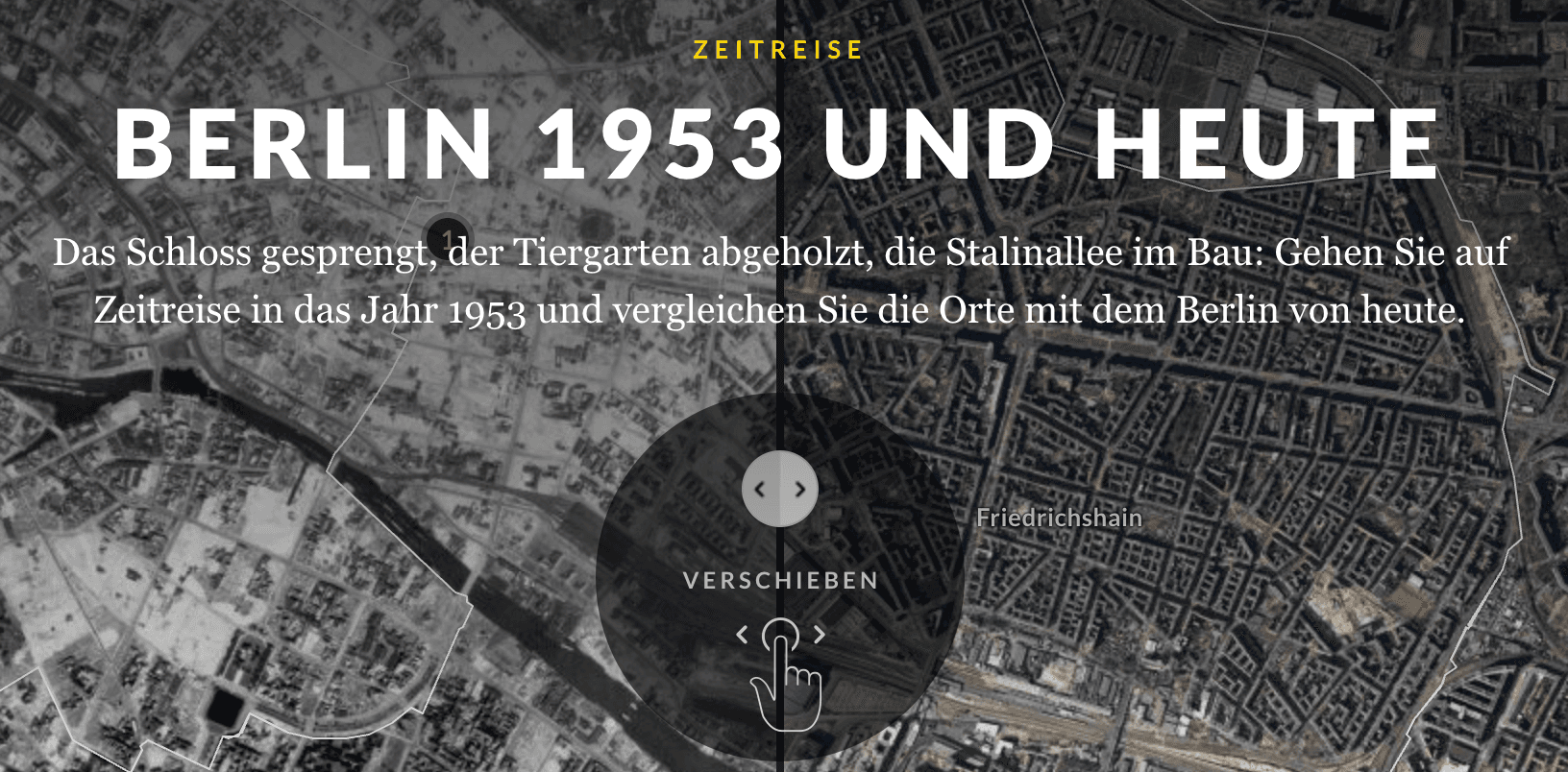
Curious to see how the street looked across different eras? Zeitreise Berlin offers a side-by-side comparison:
Stay in this building
The apartment on the ground floor of Seumestraße 8 — 58m², two bedrooms, two queen beds, sleeps up to 4. One step at the street entrance; no elevator needed. Available for direct booking; no Airbnb service fee.